
Child Care
Workforce Solutions of Central Texas can help pay for child care that nurtures your children while providing reassurance and relief to your daily life.
Child Care Services enables parents to earn or attend courses by offering access to child care scholarships, information about trusted early learning programs, parent classes, and referrals to other resources. Child Care Services can also provide information about other programs within Workforce Solutions of Central Texas that might benefit you and how to find an early learning program in your area, or all across Texas.

How to Apply for Child Care
If your family meets all eligibility requirements, and if WSCT has funds available, we may pay a portion of your family’s child care costs. You may qualify if you can say yes to the following questions:
1
Do you live in one of the following counties?
Bell, Coryell, Hamilton, Lampasas, Milam, Mills, or San Saba.
2
Do you work, attend school full-time, or both, for at least 25 hours per week?
Your current household members must average 25 hours per week.
3
Are you currently looking for employment?
Parents who need child care in order to look for work are eligible for three months of child care (active job search is allowed within a 12-month period).
4
Do you meet Workforce Solutions’ family income guidelines?
You may be responsible for a co-payment based on your family’s income. View income guidelines
Financial Aid Required Documents
When applying for child care financial aid, you will need the following information:
1
Date of birth for all household members
2
Proof of U.S. citizenship or legal immigrant status
For each child on whose behalf you are applying for childcare financial assistance, alien registration cards (I-151, etc.).
3
Employment information for all household members
Including: name, address, and phone number of the employer; work hours/days; rate of pay; any other paid.
4
Training information for all adult household members
Including: name, address, and phone number of the school; days per week; current enrollment hours; total hours completed; anticipated graduation date and transcript.
5
Amount of household income received from other sources
Such as TANF, SSI, etc.
6
Child care information
Including: name, address, phone number, city, and zip code of a licensed or registered child care provider.
Choosing a Provider
The Child Care Services (CCS) team knows that choosing a child care provider is one of the most important decisions parents make. We can help you find a quality child care option that is right for you and your child. If you qualify, we offer scholarships to help you pay for child care. When parents feel good about their child care provider, they are more successful reaching their education and career goals.
Use Texas Child Care Connection (TX30) to search for available child care providers in your area.
Family Member Child Care
Parents may choose a relative to care for their child, however, the relative must meet the requirements of child care regulation for becoming a listed family home.
Family child care guidelinesAdditional Resources
To assist you in your search, here’s more information on how to choose the right child care option for you and your family.
How to Become a Provider
To become an eligible provider and receive funding from WSCT Child Care Services, your early learning program must meet these requirements:
1
Have a current Health and Human Services (HHS) License
2
Meet state and federal program requirements
- The provider must not be on corrective or adverse action with child care regulation.
- The provider must not be debarred from either state or federal programs such as the child food and nutrition program.
3
Complete the authorization process with us
- A copy of your license or permit from Texas Department of Family and Protective Services.
- A copy of the rates you charge for child care for all age groups for which you provide services.
Texas Child Care Connection Attendance System
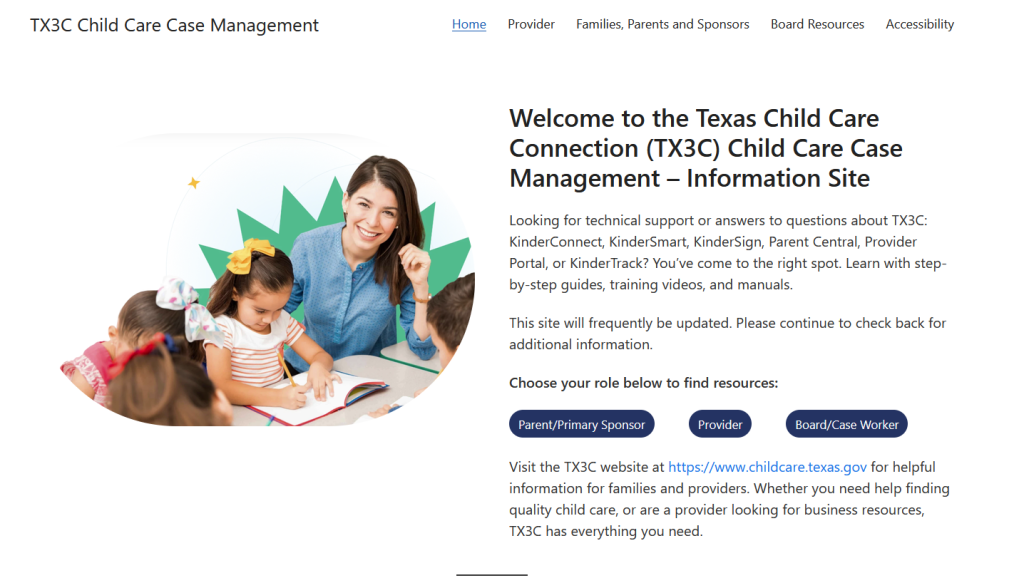
The new Texas Workforce Commission’s Child Care Connection (TX30) Attendance system went live May 17, 2023. This system is used by both parents and providers.
Child Care Resources
Early Childhood Intervention Services (ECI)
A statewide program within the Texas Health and Human Services Commission for families and children (up to age 3) with developmental delays, disabilities, or certain medical diagnoses that may impact development.
Head Start and Early Head Start Programs
Help prepare children to enter school and provide services to support their mental, social, and emotional development. Families who have low incomes or meet other requirements may be eligible.
WIC Supplemental Nutritional Program
The goal of the Women, Infants, and Children (WIC) program is to safeguard the health of low-income women, infants, and children (through age 5) by providing nutritious foods, information on healthy eating, and health care referrals.
Military Child Care Fee Assistance Programs
Members of the armed services may receive help paying for child care in the community where they live if they are unable to obtain care on the base.
TexCare Children’s Health Insurance Program (CHIP)
The Children’s Health Insurance Program is designed for families who make too much money to qualify for Medicaid health care, yet cannot afford to buy private insurance.
Child and Dependent Care Tax Credit
Tax credits reduce the amount of tax you owe and may result in a tax refund. This credit is available to people who pay for child care so they can work or look for work.
Earned Income Tax Credit
Tax credit to reduce the amount of tax you owe and may result in a refund. This is a tax credit for people with moderate and low incomes.
Search Texas Child Care
Search based on your specific needs, by location or provider.
Texas Child Care Availability Portal
Explore physical child care programs based on your location and children’s age. Or explore virtual programs.
Texas Rising Star
Quality rating and improvement system for Texas early childhood programs.
Training for Parents
Learn more about formal parenting classes.
Report Child Care Fraud
Report fraud, waste, and/or abuse in Child Care Services.